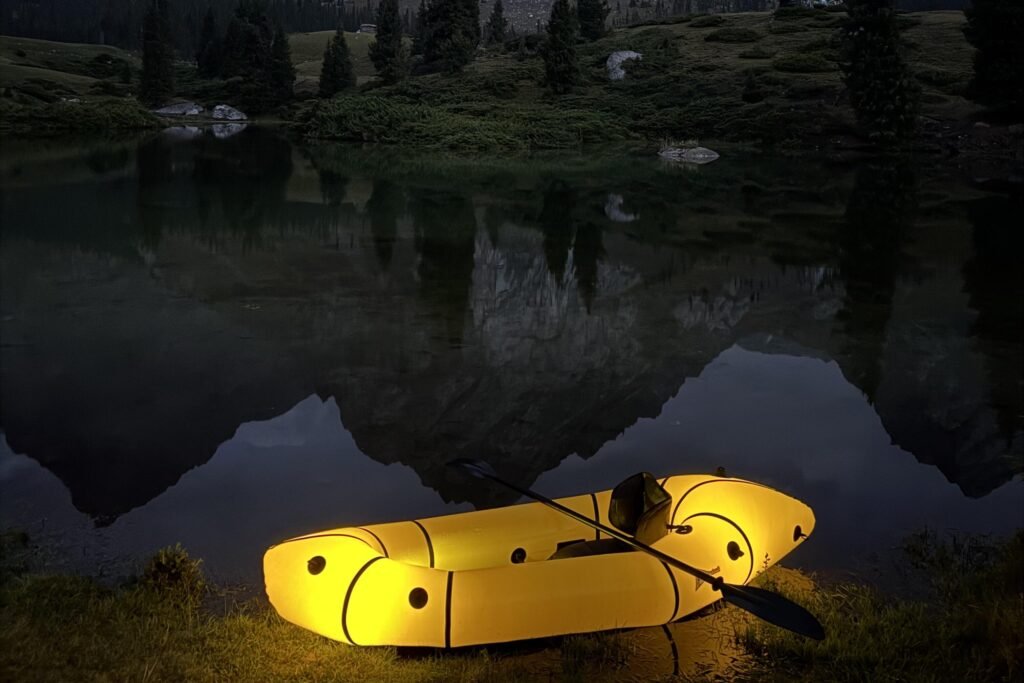
A packraft is an inflatable boat light and compact enough to carry in a backpack — most weigh about as much as a tent and roll down to roughly the size of a sleeping bag. That one fact has created a whole new category of trip: hike to a river or a mountain lake, inflate the boat, paddle out, then pack everything away and walk on. For outdoor retailers, packrafts sit at the crossroads of hiking, camping and paddling, and they are one of the fastest growing niches in water sports. Here is what you need to know before you stock them.
Not Just a Small Inflatable Kayak
Customers often ask how a packraft differs from an inflatable kayak, and the answer is the design brief. An inflatable kayak is built to be carried from a car to the water. A packraft is built to be carried for kilometres first — every gram and every litre of packed volume matters, because it shares a backpack with a tent, a sleeping bag and food. Packrafts are also shaped for rivers: short, wide and stable, with the buoyancy to handle moving water that would swamp a recreational kayak. If your store serves hikers and campers as well as paddlers, a packraft is a product all three groups can get excited about.
The Construction Details Buyers Ask About
Packraft shoppers are researchers, and they compare construction before price. The questions you will hear most:
Fabric. Most quality packrafts use TPU-coated nylon — light, tough and packable. Heavier PVC boats cost less but weigh more and roll up bigger, which works against the whole idea of the product.
Seams. Welded seams are stronger and lighter than glued ones and are a genuine selling point worth stating on the listing.
Cargo fly. Many models have a waterproof zipper in the stern so gear can be stored inside the tubes. It keeps the deck clear, lowers the centre of gravity and is one of the features experienced buyers look for first.
Spray deck and thigh straps. A spray deck keeps water out in rapids, and thigh straps connect the paddler to the boat for control. Calm-water models skip both to save weight — the right choice depends on the water your customers paddle.
A listing that answers these four points plainly will outsell one that only lists dimensions.
Sizes, Capacity and Water Grades
Almost all packrafts are solo boats, which keeps ranging simple. What varies is length and load capacity — and here honesty matters as much as it does with tent capacity. A boat’s stated maximum load should leave room for the paddler plus a full backpack, and the boat should sit high enough in the water to handle waves without shipping water over the bow.
Packrafts are also described by the water they are built for, from flat lakes and gentle rivers up to proper whitewater. Stocking one calm-water model and one river-capable model covers most buyers; pushing a calm-water boat as a whitewater boat is how stores earn returns and bad reviews.
What Should Be in the Box
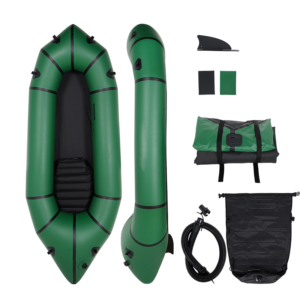
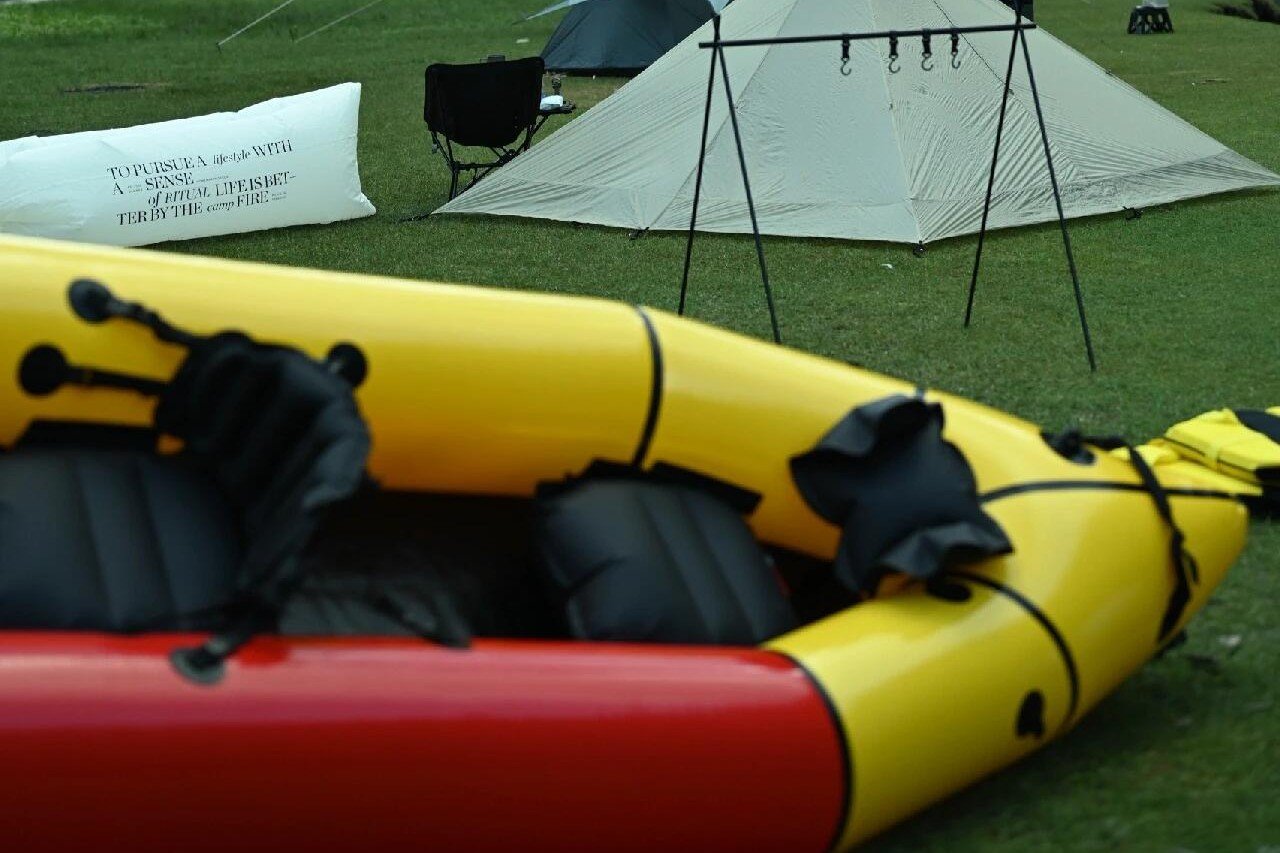
A packraft is useless without a way to inflate it, so check what the supplier includes. Most are inflated with a lightweight inflation bag rather than a pump — it is faster than it sounds and adds almost no weight. A basic repair kit, packing straps and a seat are the other essentials. As with paddle boards sold without pumps, a boat that arrives missing its inflation bag generates exactly the reviews you do not want. Complete packages also make your listing simpler: one price, everything included, no surprises.
6 Packraft Buying Mistakes to Avoid
1. Buying a “packraft” that is too heavy to carry. The whole point of a packraft is that it travels in a backpack. Heavy PVC boats sold under the packraft name defeat the purpose on any real hike. Check the net weight before anything else — a genuine hike-in solo boat should be around 2–3 kg, like a 2.2 m double-layer TPU model at 2.4 kg. Heavier motor-ready fishing platforms are excellent boats, but they are car-to-water tools; do not sell them as hiking boats.
2. Choosing fabric for price instead of for the trip. Single-layer fabric saves money and punctures easily. Double-layer TPU is the workhorse for boats that get dragged over gravel and stuffed into packs daily; PVC with a drop-stitch floor is the right call when rigidity matters more than weight, such as a fishing platform. The mistake is not PVC or TPU — it is mismatching the fabric to how the boat will actually be used.
3. Trusting the load rating without doing the maths. A capacity figure has to cover the paddler plus the backpack, food and water. A solo boat rated at 180 kg leaves generous headroom for a paddler and a full multi-day pack; a rating that barely covers the paddler alone means a swamped, sluggish boat once real gear goes in. On tandem boats, check the rating per person, not per boat.
4. Assuming everything is in the box. A boat that arrives without a way to inflate it, or without a repair kit, is a return waiting to happen. Check the contents list before ordering: a complete package states it plainly — carry bag, hand pump, four-piece paddle, fin and repair kit. If the listing is vague about what is included, ask before you commit.
5. Inflating every chamber to the same pressure. Different parts of the boat take different pressures. On a drop-stitch floor model, the hull runs at about 3.5 PSI while the floor needs 6–8 PSI to go properly rigid. Pump the floor to hull pressure and the boat feels soft and slow; pump the hull to floor pressure and you stress the seams. The figures should be printed in the listing — if they are not, that is a warning sign.
6. Selling a calm-water boat for whitewater — or a motor-ready boat as “motor included”. Match the boat to the water: a model listed for lake and river drifting, fishing and leisure should be sold for exactly that. And “motor-ready” means the stern has mounting holes for a thruster bracket — the motor itself is not included, and the
listing should say so in plain words, or the complaints will say it for you.
Stocking Packrafts the Low-Risk Way
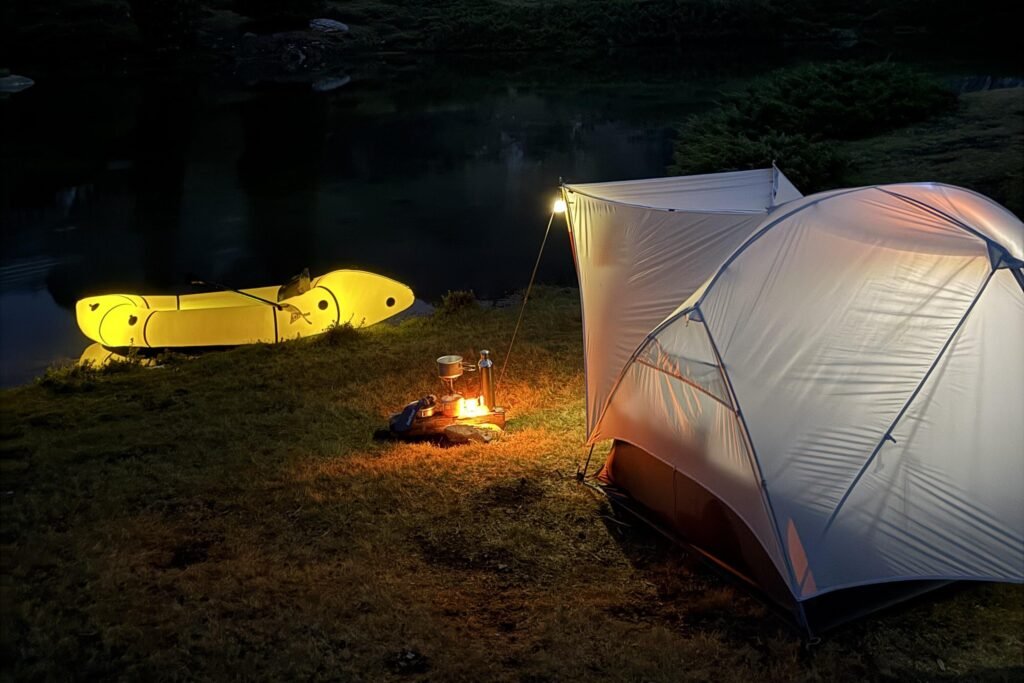
Packrafts pair naturally with gear you may already sell: four-piece breakdown paddles that fit in the same backpack, dry bags, and lightweight PFDs. They also suit a trial-first approach — the boats are compact to ship and store, so a small first order does not eat warehouse space the way hard kayaks do, and you can widen the range once you see which water your customers actually paddle.
MiiChill’s water sports range includes packrafts alongside inflatable kayaks, paddle boards and accessories, with mixed-batch sourcing across the range and every order inspected before dispatch. Browse the water sports range or request a wholesale quotation, and tell us about the rivers and lakes near your store — we can help you pick the right boats to start with.
Related Wholesale Products
Products matched to this article’s topic. Wholesale only — prices on request.