Tents anchor your whole camping section. They are the biggest item on the shelf, the purchase your customers research the longest, and the product that decides whether a shopper comes back to you for everything else. Choose the range well and the sleeping bags, furniture and accessories around it sell themselves. Choose it badly and you are left with bulky stock that is expensive to store and slow to move.
This guide walks through how to choose wholesale camping tents for a retail range: start with your customers, match the tent types to them, compare the specs that actually matter, and build an order that lets you test before you commit.
Start with who is camping, not with the tents
Every tent decision gets easier once you name the camper. Most retail ranges serve some mix of four groups:
Family campers want space and comfort: separate bedrooms, a living area, headroom to stand up in, and a pitch that does not ruin the first evening of the holiday.
Beginners and casual campers want speed. If a tent takes an hour and a manual to pitch, it comes back to your store. Pop-up and instant designs exist for exactly this buyer.
Backpackers count grams. For them the headline is packed weight, and an ultralight tent around 1 kg is a different product from a family shelter even though both are called tents.
Cold-weather and mountain campers need four-season protection: stronger poles, fuller coverage and fabrics that handle wind and snow loads.
Write down which of these groups your store actually serves, and in what proportion. That split is your range plan.
Match the tent types to your customers
With the customer split in hand, the types fall into place. Our wholesale camping tents range is built around the same logic:
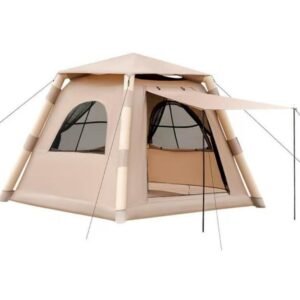
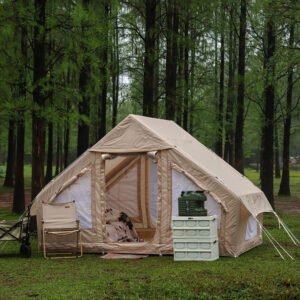
Family tents with bedrooms and a living room are the volume sellers for family-focused stores. Two-room layouts let parents and kids sleep separately, and the living area gives the tent its showroom appeal — this is the tent customers walk into at an exhibition and buy with their hearts.
Pop-up and instant tents suit beginners, festival campers and rental fleets. They pitch in minutes, forgive inexperience, and turn over quickly at accessible price points.
Ultralight tents serve the backpacking shelf. Down to around 1 kg packed, they sell on specification: weight, packed size and fabric. These buyers read every number, so list them accurately.
Four-season tunnel and pyramid tents cover cold-weather camping. Tunnel designs give a strong space-to-weight ratio for mountain use, while pyramid tents offer simple, storm-worthy shelter that also pairs with a stove for winter camps.

A balanced first range usually takes one or two models per customer group rather than five models for one group. Depth is something you add after you know what your market buys.
Compare the specs that actually matter
Tent spec sheets are long. Four things decide whether a model earns its shelf space:
Capacity and floor plan. A “6-person” rating means six sleeping mats side by side, not six people with luggage. Check the floor dimensions and whether the layout includes a living area or vestibule — that is what family buyers are really paying for.
Packed weight and size. This decides who the tent is for and how it ships to you. Ultralight models justify premium pricing per gram saved; large family tents are bulky freight, so confirm the carton size before you price the shelf.
Seasonality rating. Three-season tents cover most recreational camping. Four-season models add stronger pole structures and fuller fly coverage. Stocking a four-season tent for summer-only customers ties up budget; the reverse leaves winter campers unserved.
Fabrics, poles and waterproofing. Compare flysheet fabrics and coatings, pole material (aluminium versus fibreglass), and how seams and zips are finished. Ask for the test data behind any waterproof claim rather than relying on a headline number, and pitch a sample yourself before ordering in depth — ten minutes with the tent tells you more than any spec sheet.
Order to test, then deepen what sells
Tents are the worst category in which to guess big. A smarter pattern:
- Open with a mixed order across your chosen types instead of a full container of one model.
- Use low minimums and trial orders to put real stock in front of real customers for one season.
- Track which group each model sells to, then deepen the winners and drop the slow lines.
- Add OEM colours, fabrics and logo printing once a model has proven itself, not before.
This is how we work at MiiChill: mixed-batch orders across styles, every order checked before dispatch, and completion of the camp with sleeping gear and tarps in the same shipment. The range is also expanding — rooftop tents, bell tents for glamping and hot tents with stove jacks are in development, so a tent range started today can grow into those lines as your market asks for them.
The short version
Name your campers first. Match one or two tent types to each group. Compare floor plans, packed weight, seasonality and build quality — and pitch a sample before you commit. Then order mixed, learn for a season, and deepen what sells.
Browse the current range of wholesale camping tents, or send us your target list and request a quote — tell us who your customers are and we will help you shape the mix.
Related Wholesale Products
Products matched to this article’s topic. Wholesale only — prices on request.