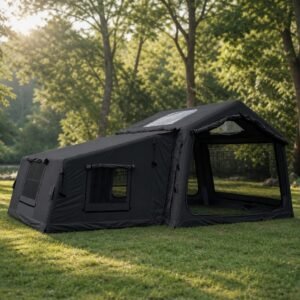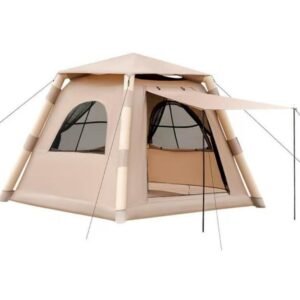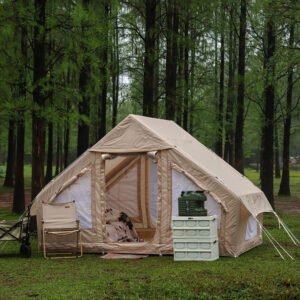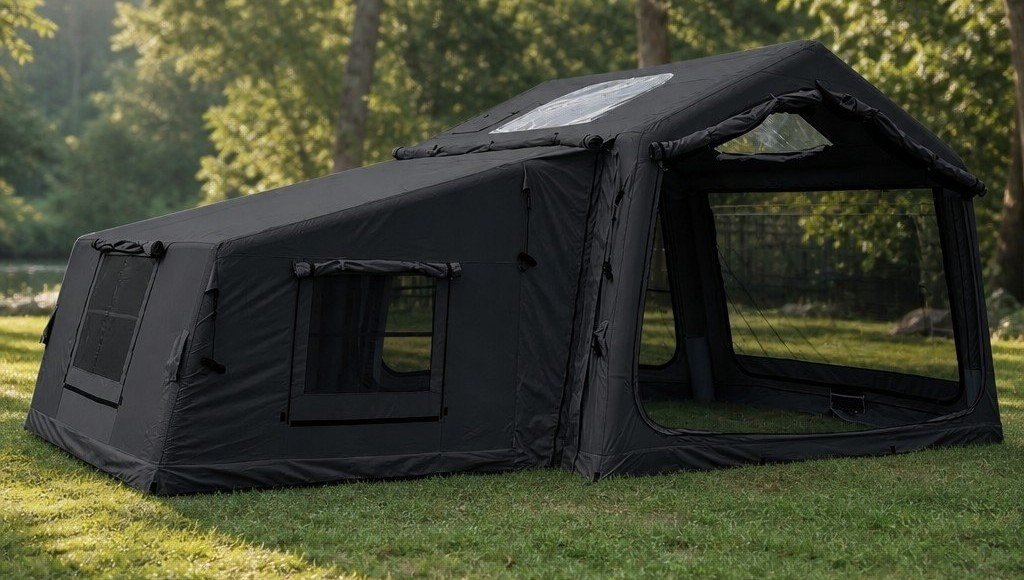
Inflatable tents — air tents — replace rigid poles with inflatable beams. Connect a pump, and the structure rises in minutes: no pole threading, no snapped fibreglass, no arguments at the pitch. The category has moved from novelty to a serious shelf line for family camping and glamping, and more retailers are asking whether it belongs in their range.
This article covers what an inflatable tent actually is, why customers pay more for one, and the checks to make before you stock them.
How an inflatable tent works
Instead of aluminium or fibreglass poles, an inflatable tent is supported by air beams — tough inflatable tubes built into the flysheet. You peg out the corners, inflate each beam through a valve with a hand or electric pump, and the tent stands. Deflating reverses the process: open the valves and the tent folds down into its bag.
Because the beams are flexible, they bend under gusts and spring back instead of snapping, and there are no pole sections to lose or leave behind. The trade-off is packed size and weight: air beams and the reinforced fabric around them usually pack bulkier than an equivalent pole tent, so this is a car-camping and glamping product, not a backpacking one.
Why customers pay the premium
Inflatable tents sell a promise pole tents cannot: speed and calm at the pitch. For a family arriving at a campsite with tired children, a tent that stands in minutes is worth real money. That is why the strongest demand comes from:
- Family campers upgrading from a first pole tent, who want bedrooms, living space and standing height without the setup stress.
- Glamping sites and rental operators, who pitch and strike tents all season and value fast turnaround and repairability over packed weight.
- Casual and festival campers who camp a few weekends a year and will not practise pitching at home.
If your store serves these buyers, an inflatable line gives you a higher price point and a clear story on the shop floor — especially if you can inflate a display model.
What to check before you stock
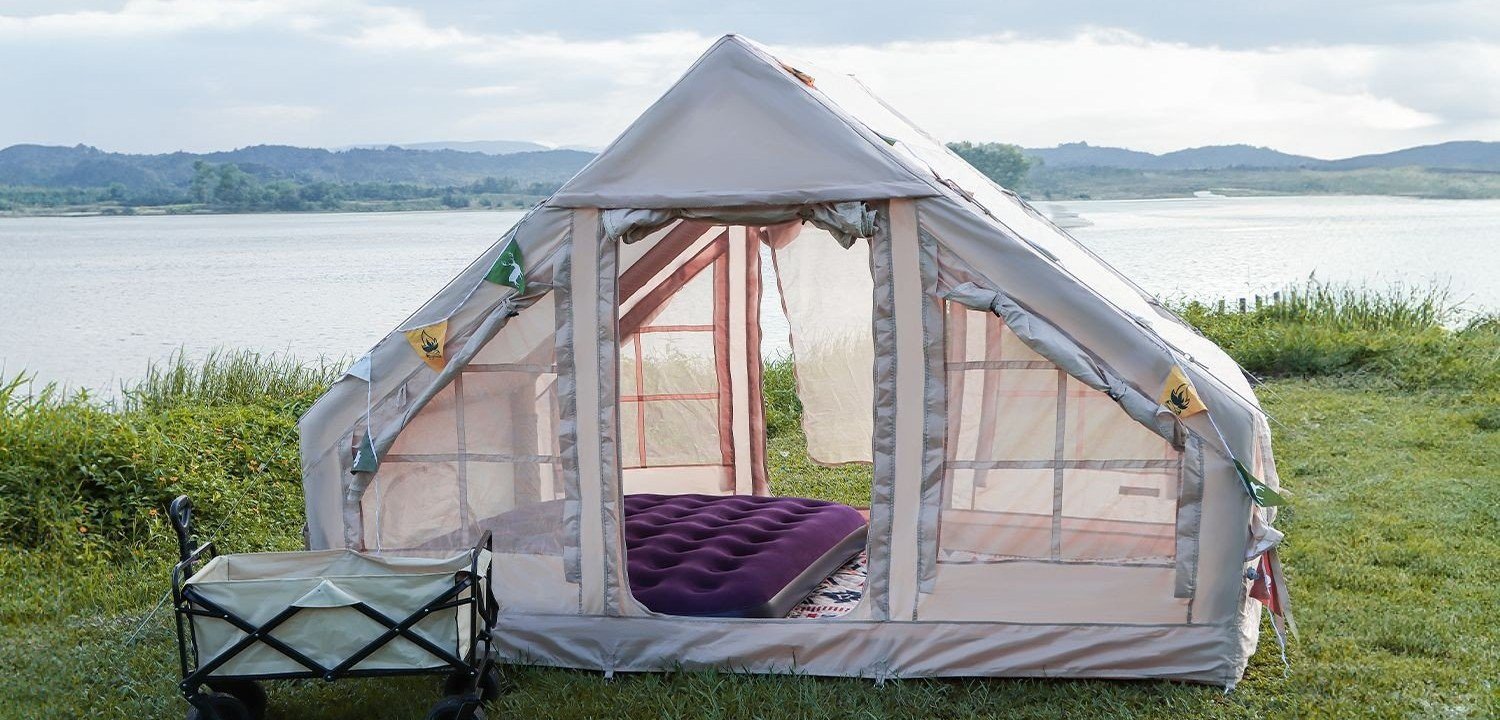
Not all air tents are built alike. Before committing to a model, work through these checks:
Beam construction. Ask what the inner tube is made of and how the protective sleeve is built. Beams are the structure; puncture resistance and sleeve quality decide the tent’s working life.
Pump and valves. Is a pump included in the box, and is it hand or electric? Check that the valve system is standard enough that a replacement pump is easy to source — your customer will ask the day theirs is lost.
Repair path. Punctures are rare but they are the first question every buyer asks. Confirm the tent ships with a repair kit, that spare tubes are available, and how a tube is removed and refitted. A model you cannot get spares for is a returns problem waiting to happen.
Packed size and freight. Inflatable family tents are bulky cartons. Confirm packed dimensions and weight before you set your retail price, and factor the freight into your margin — this category rewards stores that price the whole cost, not just the unit price.
Pitch it yourself. Inflate a sample on your own floor. Time it, check the seams and zips under pressure, and leave it standing overnight. A beam that loses firmness by morning is a model to walk away from.
Selling and supporting them in store
A few practices separate stores that do well with air tents:
- Show the pitch. A short loop video or a live demo day answers the only real objection — “is it really that fast?” — better than any signage.
- Bundle the essentials. Offer the pump upgrade, a footprint groundsheet and a repair kit at the till. Attach rates on this category are high because buyers are already in a problem-solving mood.
- Set expectations honestly. Air tents are quick and comfortable, but they are heavier to carry and cost more than pole equivalents. Customers told this upfront become advocates; customers surprised by it become returns.
- Stock the spares. One spare tube and a couple of pumps per model turns your most likely after-sales issue into a five-minute fix.
Our own range includes a two-room inflatable air tent built for family glamping, alongside the wider inflatable camping tents selection — and if you are planning the tent range as a whole, our wholesale camping tent buying guide walks through matching types to customers.
The short version
Inflatable tents trade packed weight for the fastest, calmest pitch in camping. They fit family, glamping and rental buyers, and they reward retailers who check beam quality, confirm the repair path, price the freight honestly and demo the pitch. Add one or two models to a mixed order, watch how your customers respond for a season, and expand from evidence.
Ready to test the category? Request a quote and we will help you build a mixed batch around your market.
Related Wholesale Products
Products matched to this article’s topic. Wholesale only — prices on request.